Nigeria Hydrocarbon Measurement Conference
07 – 09 Oct 2025 | The Federal Palace Hotel, Victoria Island, Lagos, Nigeria
Powered by Fleissen Events
NiHMEC 2025
Powered by Fleissen Events


COMPANY SINCE 2023
Concept Note
he Nigeria Hydrocarbon Measurement Conference (NiHMEC) serves as a platform where stakeholders from Nigeria's petroleum industry and beyond gather to share knowledge and experiences on hydrocarbon measurement and accounting issues. Recognizing that flow measurement is pivotal in quantifying oil and gas revenue, NiHMEC has captured the attention and interest of all stakeholders within Nigeria's petroleum sector.
NiHMEC 2026 builds directly on the insights documented in the NiHMEC 2025 Report, which highlighted major shifts in Nigeria’s hydrocarbon measurement landscape. The 2025 edition of NiHMEC demonstrated that the country is making measurable progress in transparency and operational assurance, driven by regulatory reforms, digitalisation and stronger collaboration among regulators, operators and service providers.
One of the strongest messages from NiHMEC 2025 was the significant reduction in crude oil losses—from 37.6 million barrels in 2021 to 4.1 million barrels in 2025. Nearly 40 percent of earlier losses were linked to measurement weaknesses rather than security issues. This shifted national attention from pipeline-related risks to the central role of metering integrity, system reliability and transparent reconciliation in safeguarding hydrocarbon revenue and strengthening the accuracy of oil and gas national production figures.
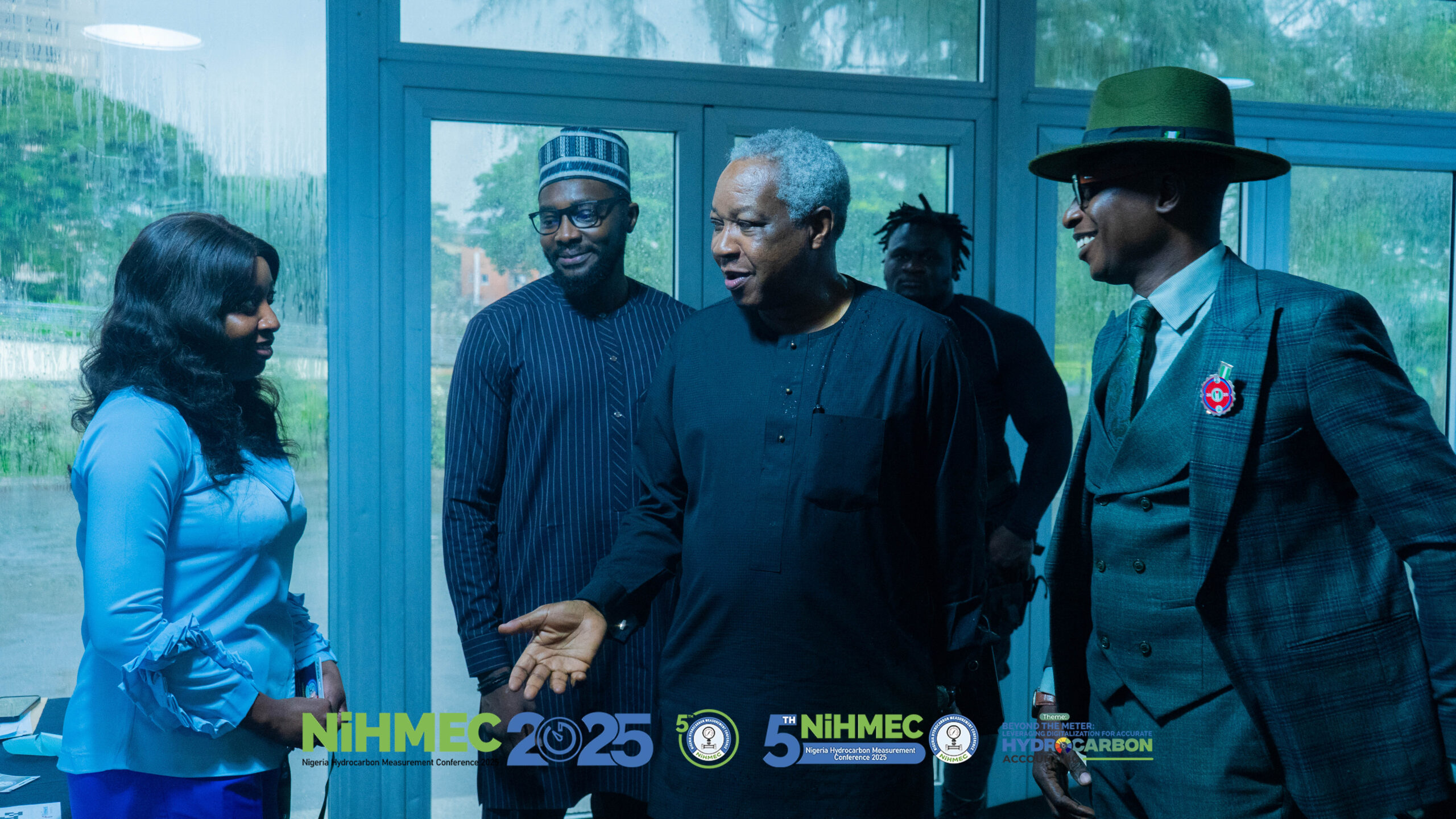
Industry leaders during the CEO panel at NiHMEC 2025 emphasised that hydrocarbon measurement is no longer a narrow engineering task, but a strategic enabler of accountability, regulatory confidence, and business credibility. Regulatory agencies discussed the nationwide upstream metering audit, implementation of new measurement regulations and the deepening of digitalisation across midstream and downstream activities. They highlighted how integrated data dashboards, real-time reporting and the Mass Balance Methodology at export terminals are reducing discrepancies and improving auditability.
The CEOs also stressed that data quality is now central to investor confidence. Verified production figures, automated reconciliation and transparent reporting support access to financing and reduce the risk of disputes at custody transfer points. As assets transition to new operators, they highlighted the growing need to strengthen internal capabilities and ensure that technical, commercial and legal teams have a shared understanding of measurement responsibilities.
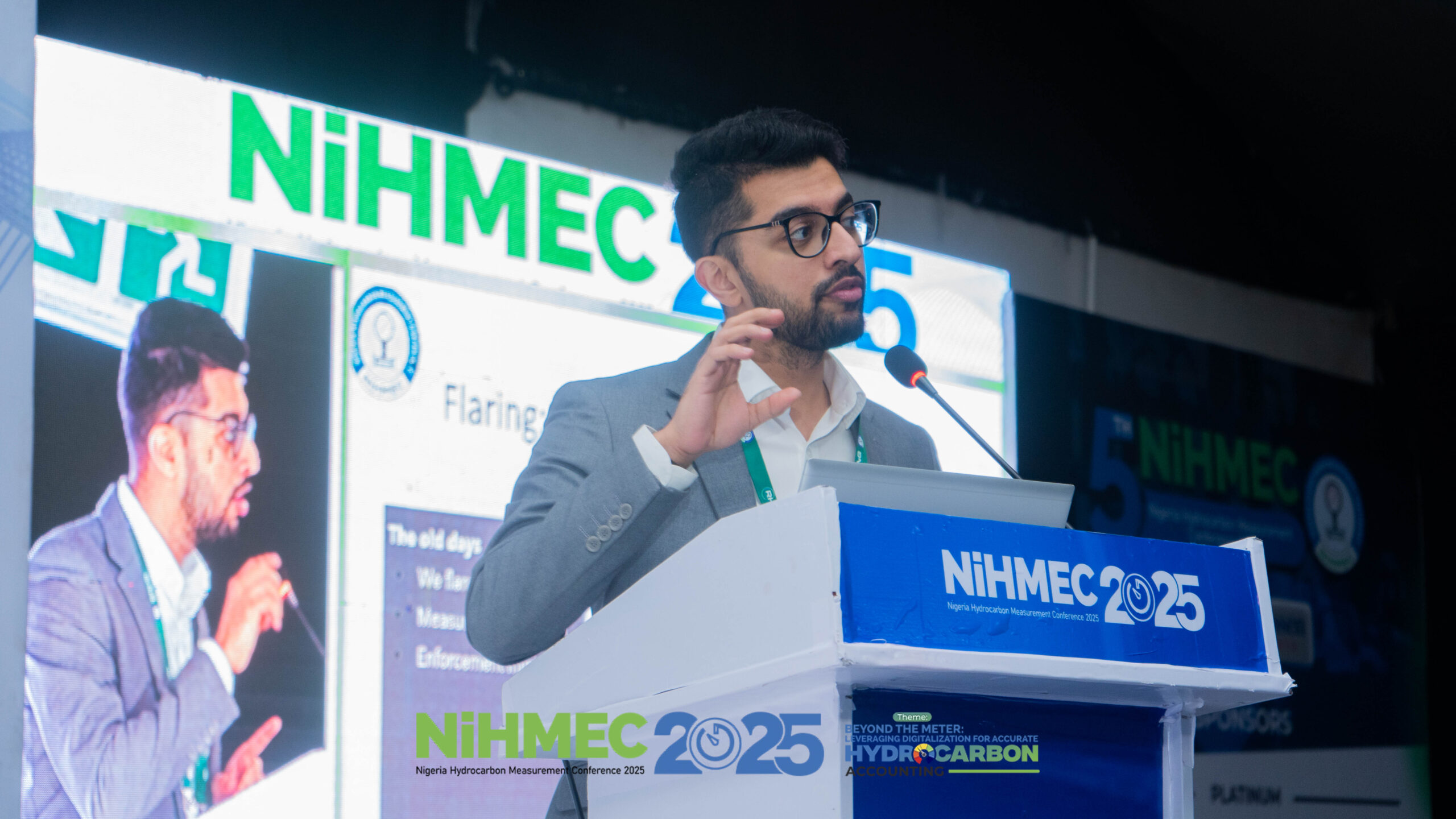
A key technical presentation at NiHMEC 2025 reinforced these messages by demonstrating how most production losses arise from non-kinetic factors such as poor instrumentation, inconsistent monitoring, unreliable measurement systems and delays in operational decisions. It showed that real-time data on pressure, temperature and flow conditions can significantly reduce deferment, and that small operational adjustments—when guided by accurate measurement—lead to meaningful volume recovery. The session emphasised that production lost through deferment is rarely recovered later, making continuous monitoring and measurement integrity essential for operational performance.
NiHMEC 2025 discussions also gave prominence to the growing role of environmental and emissions measurement. Discussions covered flare quantification, venting, fugitive emissions, methane reduction and the importance of accurate data for Nigeria’s climate and regulatory commitments. Presentations underscored that environmental measurement is now becoming integrated into hydrocarbon accounting, requiring the same discipline applied to fiscal and production data.
Across all sessions, several themes consistently emerged:
- Digitalisation is reshaping measurement and accounting practices;
- Regulatory expectations for accuracy and transparency continue to rise;
- Commercial and legal teams must better understand measurement risks;
- Cross-functional collaboration is necessary to prevent disputes;
- Developing skilled personnel is critical to sustaining progress.
NiHMEC 2026 is therefore designed to deepen these discussions and respond to the practical needs highlighted in the 2025 Report. Its structure—including a focused Masterclass and a three-day main conference—will provide a platform for strengthening people, processes and technology across Nigeria’s hydrocarbon measurement ecosystem.
The Theme for NiHMEC 2026 is
𝐒𝐭𝐫𝐞𝐧𝐠𝐭𝐡𝐞𝐧𝐢𝐧𝐠 𝐇𝐲𝐝𝐫𝐨𝐜𝐚𝐫𝐛𝐨𝐧 𝐌𝐞𝐚𝐬𝐮𝐫𝐞𝐦𝐞𝐧𝐭 𝐚𝐧𝐝 𝐀𝐜𝐜𝐨𝐮𝐧𝐭𝐢𝐧𝐠 𝐟𝐨𝐫 𝐎𝐩𝐞𝐫𝐚𝐭𝐢𝐨𝐧𝐚𝐥 𝐚𝐧𝐝 𝐑𝐞𝐯𝐞𝐧𝐮𝐞 𝐑𝐞𝐬𝐢𝐥𝐢𝐞𝐧𝐜𝐞
OBJECTIVES of NiHMEC 2026
1. Address skills shortages in measurement, accounting and reconciliation, especially as assets transition to new operators.
2. Improve measurement systems, internal processes and data governance to reduce losses and support accurate allocation, reconciliation and custody transfer
3. Clarify commercial and legal implications of metering accuracy, including contract risks, revenue exposure and shared-facility disputes.
4. Support the adoption of digital platforms, automation and cyber-resilient measurement systems that underpin transparency and effective decision-making.
5. Prepare operators for sustainability and transition requirements, particularly in flare measurement, methane quantification and environmental reporting.
Upstream production measurement and fiscal metering
Measurement for sustainable oil field operations and environmental stewardship.
Enhancing transparency and efficiency in hydrocarbon accounting.
Loss reduction in natural gas pipeline and petroleum downstream operations.
NiHMEC 2026 Details
Conference venue
Conference venue
Conference Registration
Conference Registration
ADVISORY COMMITTEE
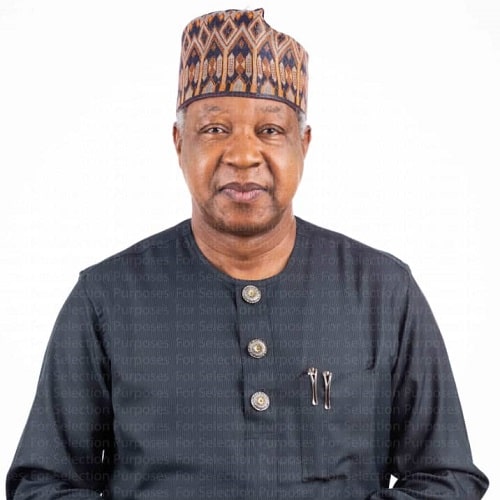
Mr. Osten Olorunsola (Chairman)
Chairman, of the Energy Institute Nigeria

Sunday Kanshio, PhD (Coordinator)
Managing Partner, Fleissen & Company

Femi Olarewaju, PhD (Member)
Chief Strategy Officer, Westpaq Engineering Nigeria Limited (WPQ)

Kenneth Uwulaka, PhD (Member)
Manager, Production Engineering and Hydrocarbon Accounting, Antan Producing Limite

Remilekun Adeeyo (Member)
Hydrocarbon Accountant, First E&P

Chidi Nwosu (Member)
Hydrocarbon Accountant, (Nuims/Jvl/Production Mgt), NNPC
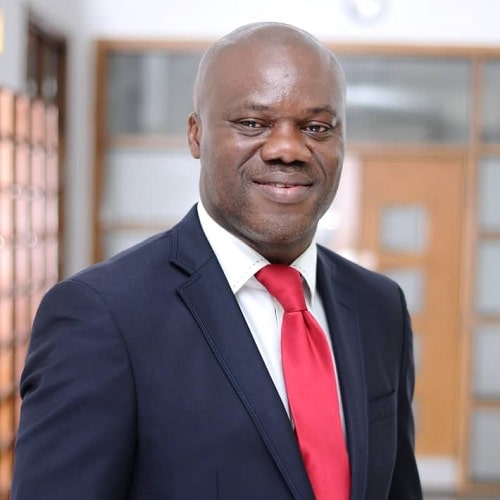
Andy Orji (Member)
Measurement Optimization Engineer, Chevron

Godfrey Omokaro (Member)
Head Metering, SPDC

Mary Alugbin (Member)
Senior Measurement Consultant,

Dr Muhammad Abba (Member)
Founder/CEO, Nordatech Energy Ltd
MEET NiHMEC 2025 SPEAKERS
Want to Sponsor NiHMEC 2025?
Showcase your brand to industry leaders at NiHMEC 2025. Sponsorship and exhibition opportunities offer prime visibility, networking, and direct engagement with key players in Nigeria’s hydrocarbon sector.